Mounting a TV Above the Fireplace: What Works, What Doesn’t, and How We Hide the Wires
The fireplace wall is the natural focal point of the room, so it is where most people want the TV. Done right, it looks like it was always meant to be there. Done wrong, you get a stiff neck, a cooked TV and a cable running down the stone. Here is how we approach it on the jobs we do across Central and North Jersey.
First question: is it too hot?
Every TV has a maximum operating temperature, usually around 95–100°F. Gas fireplaces with a mantel almost always pass. Wood-burning fireplaces and modern linear gas units without a mantel can push a lot of heat straight up the wall.
The simple test: run the fireplace for 30 minutes, then hold your hand where the bottom of the TV would sit. If it is uncomfortable to keep it there, the TV should not go there without a mantel, a heat deflector, or a different plan. We check this with a thermometer on every fireplace install.
Second question: how high is too high?
Ideal viewing has the center of the screen at or slightly above eye level from your couch. Over a fireplace it is always higher than that. Two ways to make it comfortable:
- Tilt. A tilting mount angles the screen down 10–15 degrees, which takes most of the strain out of looking up. This is the right answer for most living rooms.
- A pull-down mount. For a big TV, a tall fireplace, or a room where you watch for hours, a pull-down mount lets you bring the screen down in front of the fireplace when it is off, then push it back up. It is the most comfortable option and the most impressive one, and it needs a solid wall behind it.
Third question: what is the wall made of?
This is where the job is won or lost.
- Drywall over studs. The easy case. Mount into studs, run the wires inside the wall.
- Brick or stone veneer. Masonry anchors, a longer drill, and careful placement so the mount lands on solid material rather than mortar joints. Wires usually cannot go through the stone, so they are routed around it (see below).
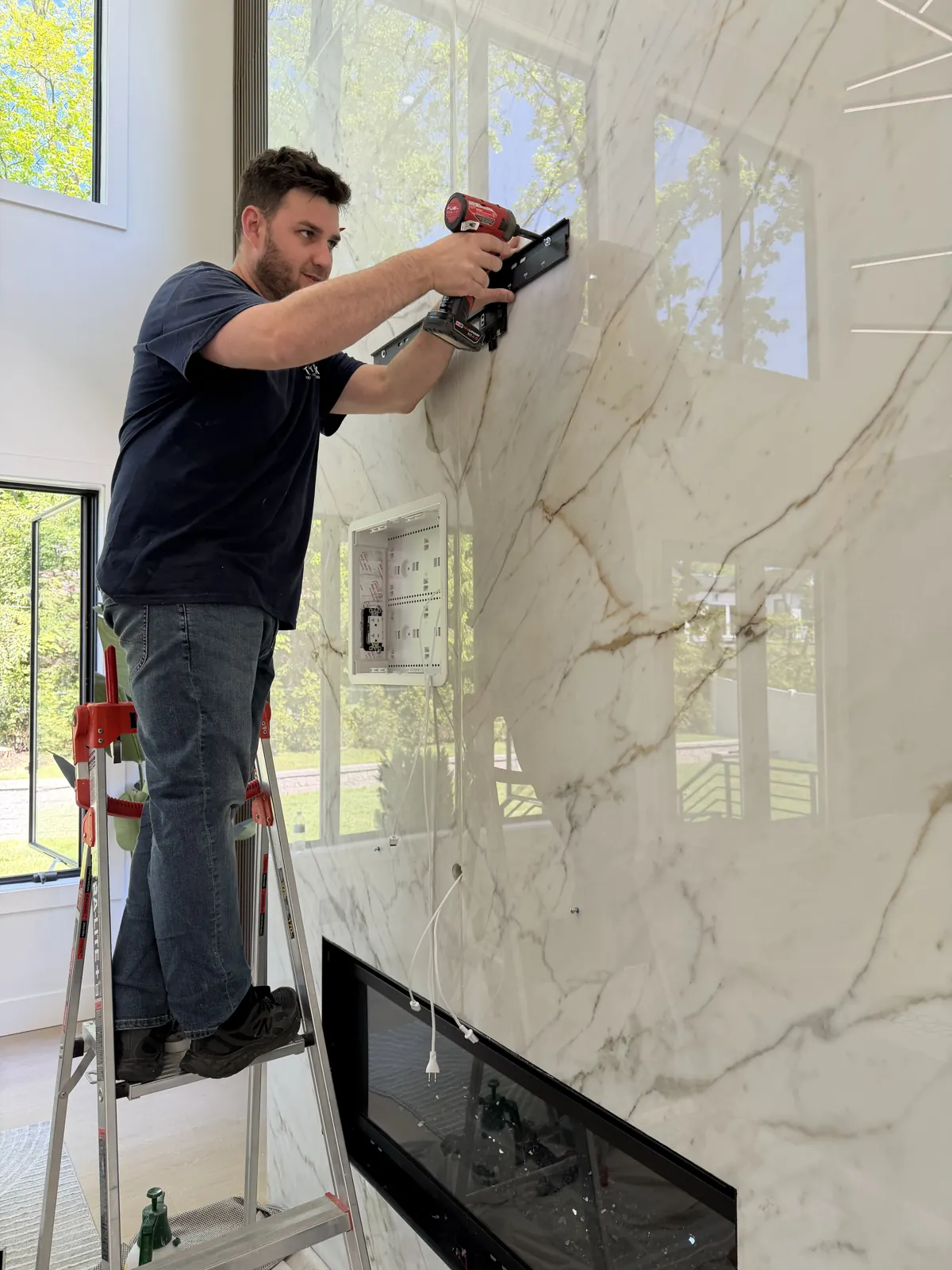
- Marble, quartz or large-format tile. Beautiful and unforgiving — a cracked slab is expensive. We drill with the right bits and templates, and we plan every hole before the first one is made.
- Stacked stone or ledgestone. Uneven surfaces need a mount with adjustable feet or a backer plate so the TV hangs flat.
How we hide the wires
A TV over a fireplace with a visible cable is the one thing everyone notices. The goal is nothing showing.
- Power. Code does not allow a regular power cord inside the wall, so we install an in-wall power kit: a recessed outlet behind the TV fed by a rated cable from an outlet lower on the wall or in the adjacent cabinet.
- HDMI and data. Run inside the wall wherever the wall is hollow. Where it is masonry, we route through the side wall, the mantel, or the cabinet next to the fireplace and come out behind the TV.
- The equipment goes somewhere else. The cable box, streaming device and game console do not need to be under the TV. We put them in a nearby cabinet, a closet or the basement and control them with a single remote or app, so the fireplace wall stays clean.
- The soundbar. Mounted directly under the TV on the same visit, wired through the same path.
What about the room’s sound?
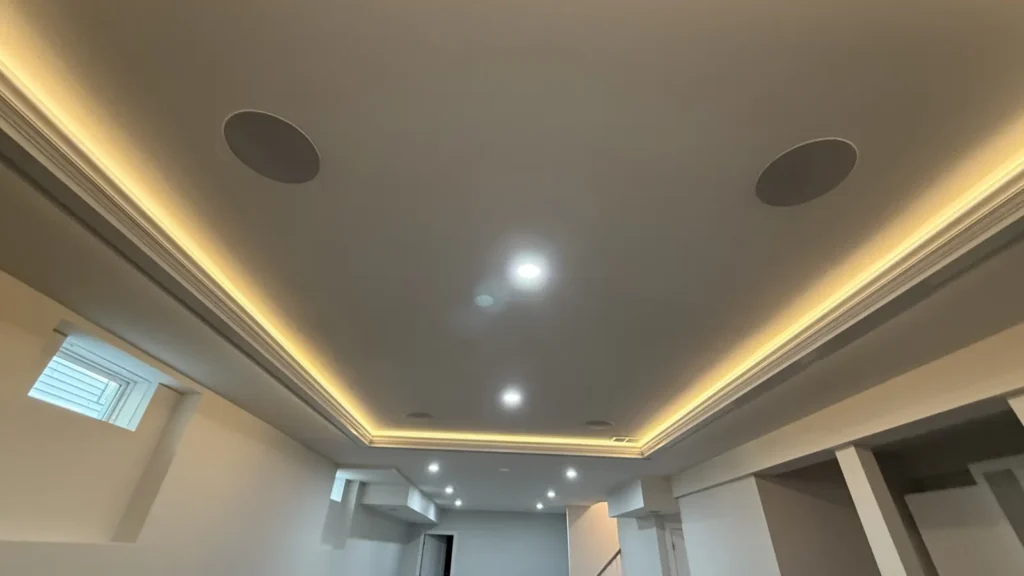
A fireplace wall is usually a wide, hard surface. A soundbar mounted with the TV is the minimum; for a real living-room setup, a pair of in-ceiling speakers with a small sub hidden in a cabinet gives you sound that matches the picture without anything on the wall.
Timeline
A fireplace TV mount with concealed power and HDMI is a half-day job on drywall and most of a day on stone or marble. We bring the TV, mount and wall covers back to the way they should look, clean up, and set the remotes up before we leave.
Want a number for your wall? Add the TV, the concealment and the soundbar in the Project Builder for a starting-at price, and attach a photo of the fireplace — the wall type tells us most of what we need to know.
Frequently asked questions
Is it safe to mount a TV above a fireplace?
It depends on the heat, and it is worth testing rather than guessing. Most TVs are rated to roughly 95 to 100 degrees Fahrenheit. Gas fireplaces with a mantel almost always pass. Wood-burning fireplaces and modern linear gas units without a mantel can push a lot of heat straight up the wall. Run the fireplace for thirty minutes, then hold your hand where the bottom of the screen would sit — if you cannot keep it there comfortably, that spot needs a mantel, a heat deflector or a different plan. We check every fireplace install with a thermometer.
Will the TV be too high to watch comfortably?
Above a fireplace it is always higher than ideal, but there are two good answers. A tilting mount angles the screen down ten to fifteen degrees and takes most of the strain out of it, which suits most living rooms. For a large screen, a tall fireplace, or a room where you watch for hours, a pull-down mount brings the TV down in front of the fireplace when it is not lit — the most comfortable option, and it needs a solid wall behind it.
Can you hide the wires in a brick or stone fireplace?
In most cases, yes. The wall construction decides the method, which is why we establish it before quoting: drywall over studs is the straightforward case, while plaster, brick and stone each need a different route for power and HDMI. Sending us a photo of the wall is usually enough for us to tell you how it would be done.
How long does the install take?
Most single-TV fireplace installs are done in one visit. The variables are the wall material and whether power needs to be brought to the mount location, so we confirm the timeline with the quote once we know what is behind the wall.
Want a number for your place?
Build your project in a minute and see a starting-at price, or send us a few photos and we'll quote it.