
Structured Cabling & Network Cabling Installation in New Jersey
Cat6 and Cat6A data cabling, business-grade Wi-Fi, racks, switches and firewalls — the clean, labeled backbone that your cameras, audio, smart home and IT all run on.
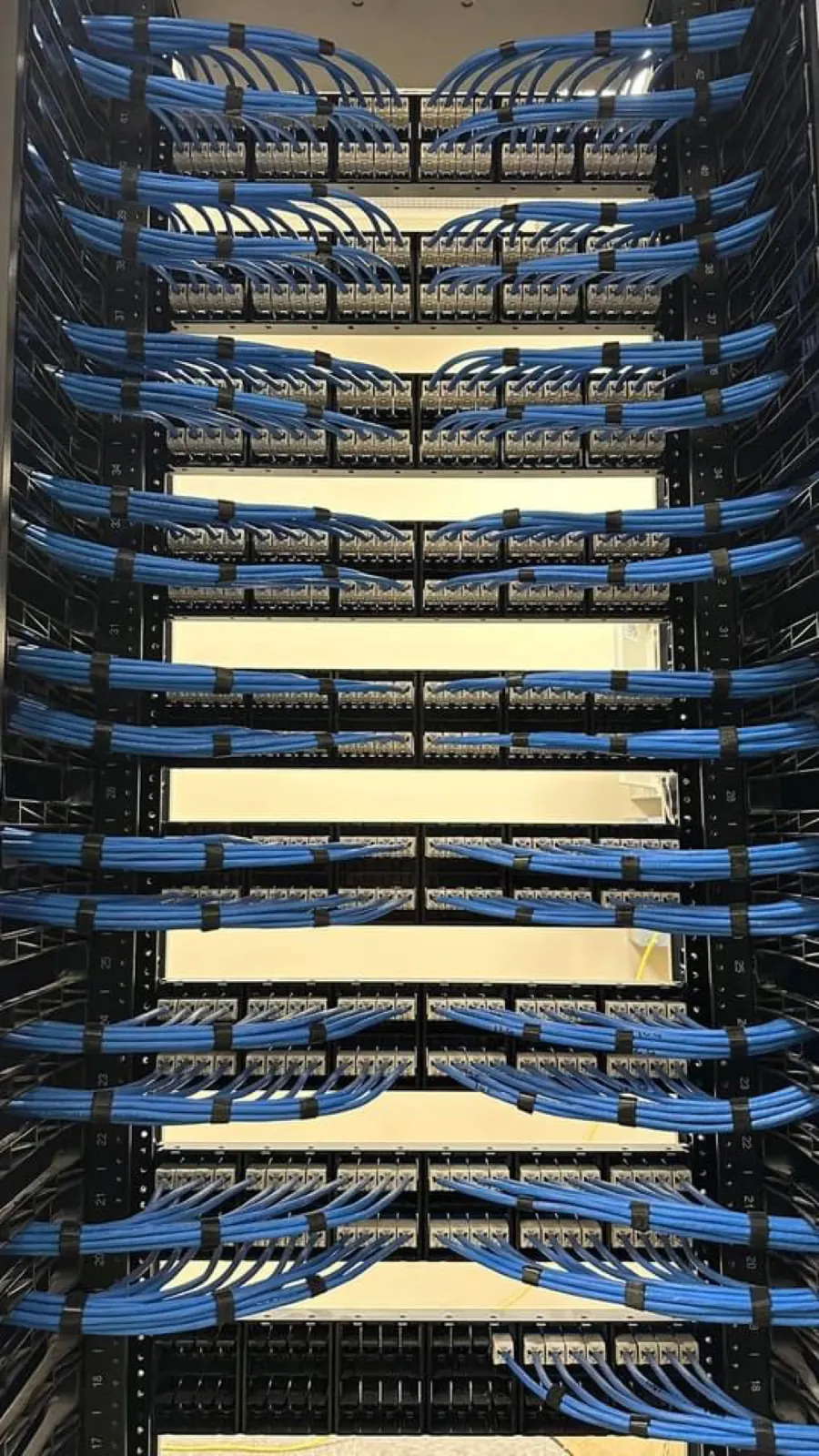 Labeled Cat6 patch panel — Central NJ office
The backbone every smart system depends on.
Cameras, audio systems, smart home devices and AI tools all depend on one thing underneath them: a strong, properly built network. TrekTek installs clean, future-ready structured cabling for homes and businesses across New Jersey — built the way data centers and enterprise offices build theirs, sized right for your property. Every job starts with a walkthrough: we check cable pathways, ceiling type, rack location and device count so the foundation is right the first time, not something you redo in two years.
Cat6 and Cat6A cabling
Neatly run, labeled and tested wired drops for data, cameras, access points and screens — the clean backbone that keeps everything fast and easy to trace later.
Business-grade Wi-Fi
Access points placed and configured for your actual floor plan, not a generic layout. No dead zones in the office, warehouse or home you actually have.
Racks, switches and firewalls
Tidy equipment racks, managed switches, routers and firewall configuration — a secure network core that is simple to service and easy to expand.
Low-voltage infrastructure cabling
Beyond data, we run the low-voltage cabling that supports security systems, intercoms and building automation through the same organized plan.
Data cabling installation
New construction, office build-outs or retrofits in existing buildings. We plan cable paths around your ceilings, walls and rack locations before a single cable goes in.
Network design for larger jobs
For bigger commercial projects we design the topology first — where cabling runs, where equipment rooms sit, and how the network scales as you grow.
What is structured cabling?
Structured cabling is a standardized system of cables, connectors and hardware that carries data, voice and video throughout a building on one organized network — instead of a tangle of separate wires for each device. It is the physical foundation that phones, Wi-Fi, cameras and computers all run on.
A properly designed structured cabling system is made up of six standard parts working together. Every TrekTek installation is planned around them, whether it is a single-floor office, a home, or a multi-building commercial property.
Entrance facility
Where the internet provider's line connects into your building.
Equipment room
The central space housing your racks, switches and core hardware.
Backbone cabling
The main runs connecting the entrance facility to equipment rooms and between floors.
Horizontal cabling
The wiring from equipment rooms out to individual offices, desks or rooms.
Telecommunications rooms
Where cable and connecting hardware link the backbone to the horizontal cabling on each floor.
Work-area components
The outlets, jacks and patch cords that connect your actual devices to the network.
Structured cabling services for businesses, and the home version of it.
Most of our cabling work is commercial: new office suites, warehouses, medical and dental practices, schools, churches and multi-tenant buildings across Somerset, Middlesex, Morris, Union and Monmouth counties. We work from your floor plan and your device count, coordinate with the general contractor and the electrician, and hand over a labeled, tested, documented system. The same discipline goes into a house: a small rack in the basement, Cat6 to every TV, office and access point, and a clean patch panel instead of a bundle behind the router.
Office build-outs and new suites
Drops to every desk, conference room and printer, a rack in the IT closet, and Wi-Fi placed for the actual layout. Scheduled around your move-in date.
Warehouses and shops
Long runs, high ceilings and rugged access points for scanners, cameras and dock offices. Cable paths planned before the racking goes up.
Medical, dental and professional offices
Cabling for exam rooms, imaging, phones and check-in, with the tidiness and documentation your IT provider and inspectors expect.
Retrofits in occupied buildings
Plaster, brick, drop ceilings and finished spaces. We work off-hours when we need to and leave no visible cable.
Homes and additions
Pre-wire for a new build or renovation, or a retrofit that finally puts the office, the TVs and the Wi-Fi on wires.
Working with your GC or electrician
We take the low-voltage scope so the electrician does not have to, and we coordinate rough-in and trim with the builder's schedule.
Fiber optic installation for New Jersey businesses.
Copper stops being the right answer somewhere around 100 meters, and between buildings it stops being the answer at all. We run fiber optic backbone where distance, electrical noise or bandwidth rule out Cat6 — between buildings on a campus, up the risers of a multi-tenant property, across a warehouse floor, or from the entrance facility to equipment rooms on each level. It is the same discipline as the rest of our cabling work: planned from the floor plan, labeled at both ends, tested, and documented so the next technician is not guessing.
Multimode and single-mode backbone
Multimode OM4 for runs inside a building or across a campus, single-mode where the distance or the bandwidth calls for it. We size the fiber to the run and the equipment on both ends, not to a catalog default.
Building-to-building runs
Connecting a second building, an outbuilding, a guard house or a detached warehouse without the distance limits and surge exposure that come with running copper between structures.
Warehouse and industrial work
High ceilings, long spans and overhead pathways. We hold OSHA certification plus scissor, boom and aerial lift certification, so the overhead work is done by us rather than subcontracted out or left for someone else.
Risers and equipment rooms
Vertical backbone between floors, into telecommunications rooms and across to the MDF and IDF closets — the runs that everything horizontal hangs off.
Terminations and patching
Fiber terminated into proper enclosures and patch panels, labeled to match the drawing, so a port can be traced without pulling a ceiling tile.
Testing and certification
OTDR testing and a certified test report per run, quoted with the job. You get the documentation, not just a working link — which matters when a landlord, an IT provider or an inspector asks.
How a structured cabling job runs, start to finish.
Every job follows the same seven steps, whether it is six drops in a dental office or two hundred in a warehouse. The order matters. Most of the cabling problems we are called in to fix trace back to a skipped step, usually testing or documentation.
Walkthrough
We walk the space with you or your general contractor and confirm where every drop, access point, camera and rack goes. We also note the ceiling type, the wall construction and any existing pathways, because those set the labor more than the cable does.
Design and drawings
Each drop is marked on the floor plan with its own ID. The quote, the install and the labels all use the same IDs, so nothing is lost between the estimate and the finished job.
Pathways
We confirm the routes: J-hooks above a drop ceiling, existing conduit, and sleeves through fire-rated walls that are firestopped after the pull. Conduit, core drilling, floor boxes and furniture raceway are provided by others or quoted separately.
Pull and terminate
Each cable is pulled in one continuous run from the jack to the patch panel, with a service loop at both ends, and terminated on keystone jacks and keystone patch panels.
Label
Every jack, every patch panel port and both ends of every cable carry the same ID from the drawing.
Test and certify
Every run is tested with a Fluke certifier. You receive the certification report showing that each link passed.
As-built
You get the marked-up floor plan and the port map, so your IT provider, your landlord or the next technician knows exactly what is where.
Cat6, Cat6A or fiber: which one fits the job.
The right cable depends on what will plug into it and how long you expect to stay in the space. We recommend the least expensive option that will still be right in ten years.
Cat6
The standard for most offices and homes: desks, phones, printers, TVs and most PoE security cameras. Cat6 carries 1 Gbps over the full 100 meters and 10 Gbps on shorter runs.
Cat6A
Rated for 10 Gbps over the full 100 meters and better suited to heavy PoE loads. We recommend it for Wi-Fi 7 access points with multi-gigabit uplinks, PTZ cameras, higher-power PoE devices and any building you plan to occupy for ten years or more.
Fiber
The backbone between telecom rooms, floors and buildings, and any run longer than 100 meters or near heavy electrical noise. Copper still connects the desks; fiber connects the closets.
Single-mode or multimode? Multimode fiber (OM3 or OM4) has a wider core and lower-cost optics, and works well inside a building for runs of a few hundred meters. Single-mode fiber (OS2) has a much smaller core, carries signal for kilometers, and is the usual choice between buildings or wherever the link may need more bandwidth later. On our side the work is the same: LC connectors, fusion-spliced pigtails, and a test result for every strand. If you are deciding what the cable will feed, our eero vs UniFi vs Araknis Wi-Fi guide and Wi-Fi installation cost guide cover the equipment side.
Commercial cabling installation, from offices to warehouses.
Most of our cabling work is commercial. Each type of building comes with its own constraints, and the quote should reflect them before the job starts, not after.
Offices and retail fit-outs
New suites, tenant fit-outs and store openings, scheduled around the ceiling grid, the inspections and the opening date. Drops for desks, phones, printers, Wi-Fi and security cameras are planned together, so the rack is sized once.
Medical and dental practices
Occupied clinical spaces, with work scheduled around patients. In healthcare buildings we follow the facility infection-control (ICRA) requirements for above-ceiling work, including dust control and clean-up.
Warehouses and high ceilings
Open structure and high-bay ceilings mean lift work. Our installer holds OSHA training and scissor, boom and aerial lift certification, so overhead runs do not need a separate lift operator.
New construction pre-wire
Rough-in before insulation and drywall, trim-out after paint, coordinated with the electrician and the builder schedule so nothing has to be fished later.
Working with general contractors. We submit product data before rough-in, label every drop to match the drawings, and hand over certification reports and as-builts at closeout. TrekTek Technologies is licensed as a New Jersey Telecommunications Contractor (License 34TE00306000). After the install, the same team can manage the network and IT that runs on the cabling. For a small-office example, see our guide to structured cabling for small offices in Middlesex County.
The standards we follow on every job.
- TIA-568 practice. Bend radius, pull tension, separation from power and maximum run lengths, on every run.
- One cable type, color-coded by use. Blue for data, white for voice, gray for Wi-Fi access points, orange for cameras and yellow for access control. Where cable is exposed, we run all black or all white so it looks deliberate.
- Keystone patch panels. Any port can be changed or replaced without re-terminating its neighbors.
- Labels that match the drawing. On every jack, every panel port and both ends of every cable.
- Abandoned cable removed. The National Electrical Code (NEC 800.25) requires accessible abandoned communications cable to be removed. We remove it per run or include it in a recabling job.
What structured cabling costs in New Jersey.
Starting prices per drop include up to 200 feet of cable, the jack and faceplate, the patch panel port, termination at both ends, labeling and the certification report.
- Cat6 data drop: from $265
- Cat6A data drop: from $335
- Fiber backbone run: from $1,450
Pathways (conduit, core drilling, floor boxes and furniture raceway) are quoted separately. Retrofits in finished walls, hard-lid ceilings, lift work and jobs of one to four drops are priced per drop on the quote. Build a starting estimate in the Project Builder, or call (908) 546-1505.
Why structured cabling pays for itself.
Less clutter, more organization
Cabling is run and labeled through dedicated pathways instead of loose along baseboards or hanging from ceiling tiles.
Faster troubleshooting
A labeled, documented system means a technician traces a problem to its source in minutes, not hours.
Room to grow
Standardized infrastructure makes it simple to add devices, workstations or equipment without rewiring the building.
Better performance everywhere
Cameras, Wi-Fi, VoIP phones and AI-driven devices all perform better on a properly built network than on ad-hoc wiring.
One team, first call to final walkthrough.
TrekTek Technologies is the structured cabling company New Jersey homes and businesses trust from the first call through the final walkthrough. As a structured cabling contractor NJ property owners rely on, we handle everything from a single-office data cabling installation to a full commercial network — including the planning and the post-install support many cabling services skip. And because the same team installs the cameras, AV and smart home gear that ride on that network, nothing falls between vendors.
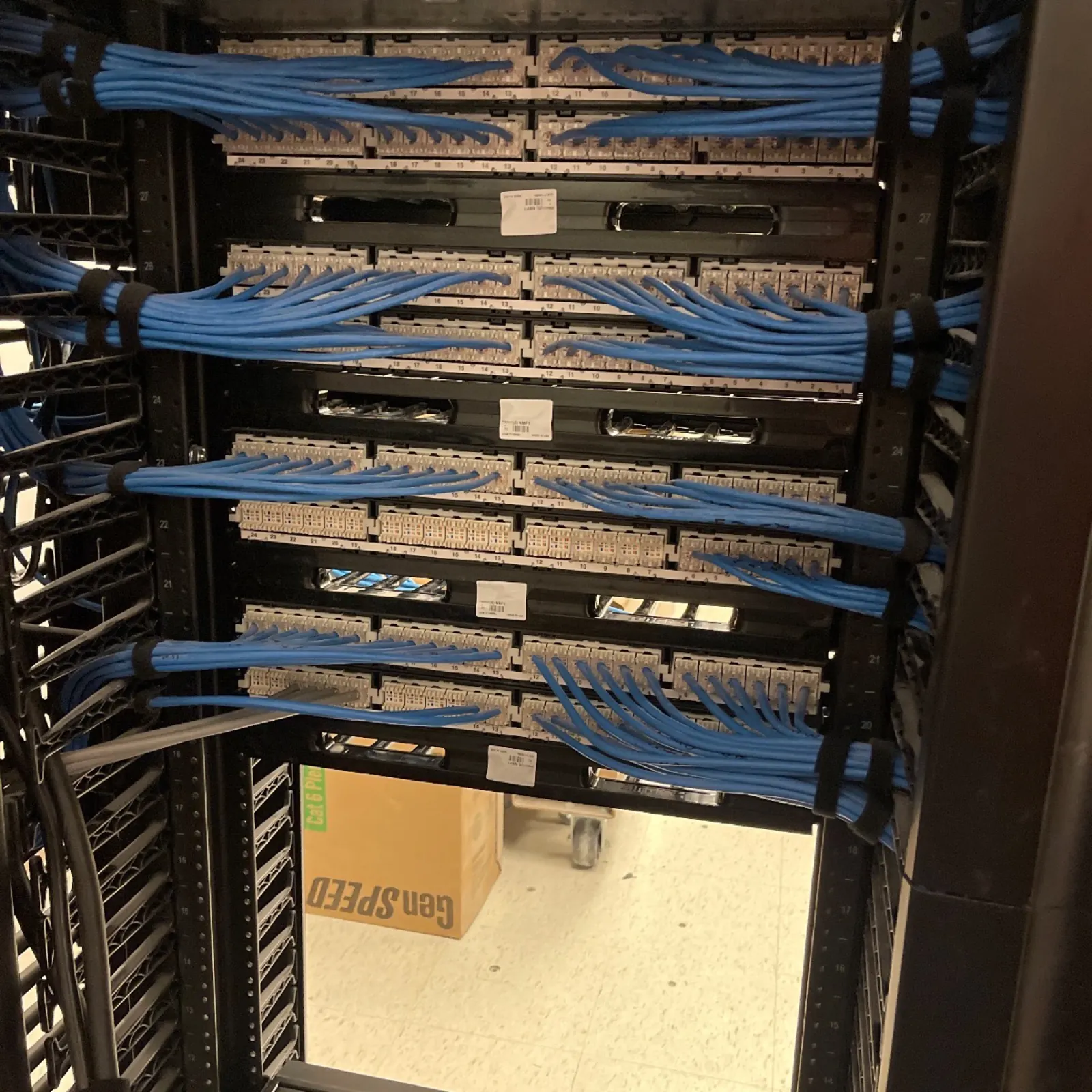
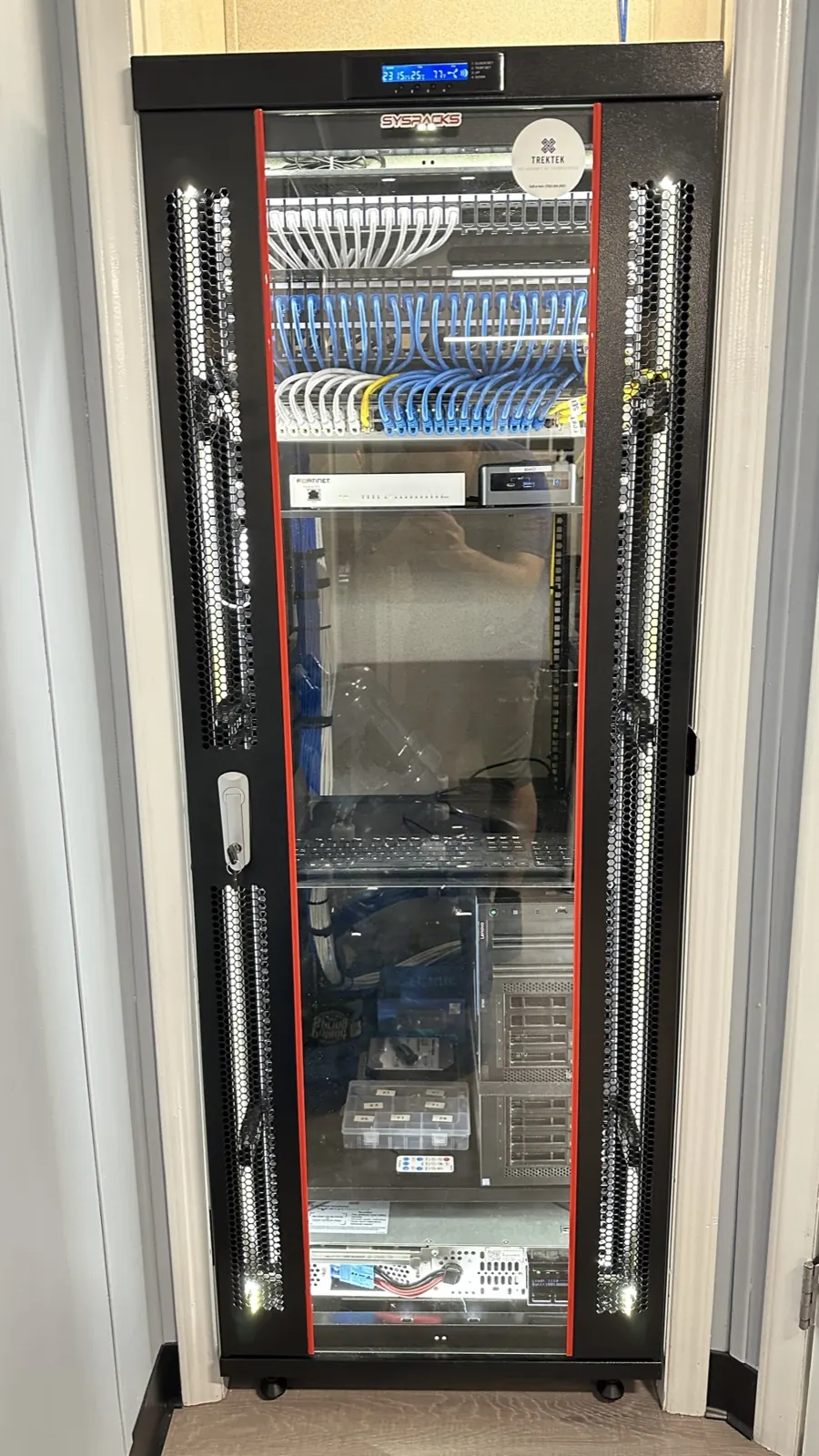
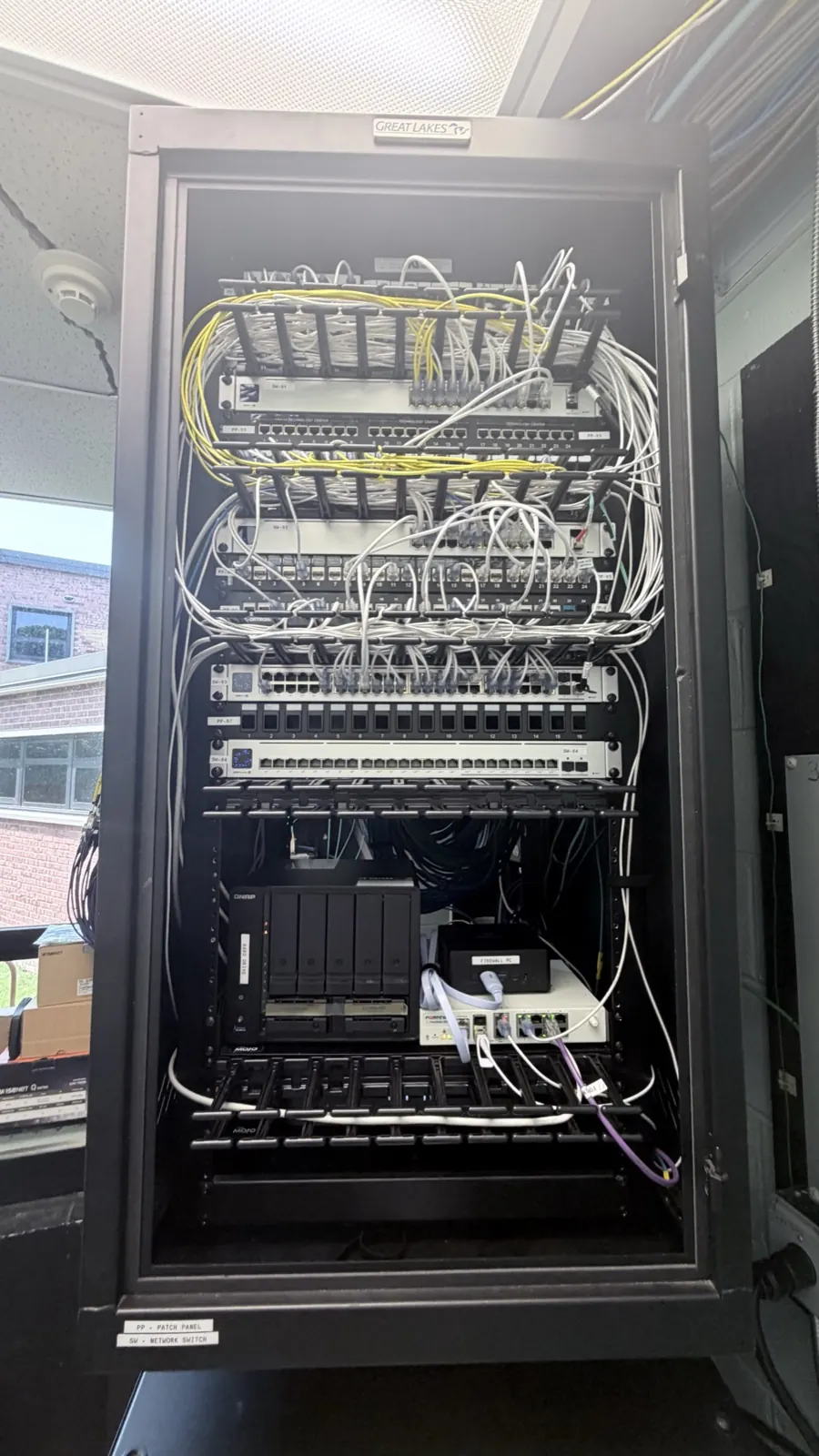
Our work, not stock photos.
Everything, start to finish.
- Walkthrough of pathways, ceilings, rack location and device count
- Cat6/Cat6A drops, labeled at both ends and tested
- Patch panels, racks and cable management
- Managed switches, router and firewall set-up
- Wi-Fi access points placed for your floor plan
- Documentation you keep — labels, map and passwords
Three steps. No surprises.
Talk it through
A quick call or on-site visit. You tell us how you use the space; we tell you what's worth doing and what isn't.
Design & quote
A clear, itemized quote with the equipment we recommend and why. Most quotes go out the same day.
Install & support
Most projects finish in 1–3 days. We set up your phone, walk you through it and stay available after.
What New Jersey clients say.
“I was having all kinds of issues with my home internet. Paul came in and suggested my own network. He installed all the equipment, took out pieces that were not even working, cleaned up the box. I now have download and upload speeds that were never possible before.”
Google review · Jeff P. · Home network“We had TrekTek replace very old and improper wiring and equipment throughout our location for all our computers. Paul and his team cleaned up all the wiring and made our workspace clean and safe.”
Google review · Mitesh P. · Business cabling“Paul and the team at Trektek were exceptional to work with. They handled the installation of a new server for our logistics office, and the entire process was seamless.”
Google review · Charles S. · Logistics officeCommon questions.
Do you do commercial structured cabling for offices and warehouses in New Jersey?
Yes. Office build-outs, new suites, warehouses, medical and dental practices and multi-tenant buildings are most of our cabling work. We plan from your floor plan and device count, coordinate with the general contractor and electrician, and deliver a labeled, tested and documented system.
Do you work with general contractors and electricians?
Yes. We take the low-voltage scope on new construction and renovations, coordinate rough-in and trim with the builder's schedule, and hand the electrician a clean separation between line voltage and data.
What is the difference between structured cabling and regular network cabling?
Structured cabling follows a standardized design across the whole building, while regular network cabling is wired device by device with no overall plan. Structured systems are easier to troubleshoot, label and expand later.
Do you install structured cabling for both homes and businesses?
Yes. We install structured cabling systems for NJ homes, offices and commercial buildings, including Cat6/Cat6A data cabling, business Wi-Fi, and full rack and switch set-ups.
How long does a structured cabling installation take?
A single home or small office typically takes 1 to 3 days. Larger commercial cabling systems are scoped individually after a walkthrough, since cable paths, ceiling type and device count all affect the timeline.
Can you upgrade my existing network cabling instead of replacing everything?
In most cases, yes. We can integrate existing cabling and hardware into a new structured cabling network rather than tearing everything out, which keeps costs down.
Do you install fiber optic cabling in New Jersey?
Yes. We run multimode OM4 and single-mode fiber backbone for offices, warehouses, campuses and multi-tenant buildings — between buildings, up risers and into equipment rooms. Runs are terminated, labeled and OTDR tested, with a certified test report quoted with the job.
When do I need fiber instead of Cat6?
Copper runs out at about 100 meters, so anything longer needs fiber. You also want fiber between separate buildings, where there is heavy electrical noise, and where the bandwidth between switches or floors would bottleneck on copper.
Are you a structured cabling contractor in New Jersey?
Yes. TrekTek Technologies is a structured cabling contractor based in Bridgewater and licensed as a New Jersey Telecommunications Contractor (License 34TE00306000). We install Cat6, Cat6A and fiber for offices, medical practices, warehouses, retail spaces and homes across Somerset, Middlesex, Morris, Hunterdon, Union, Mercer, Monmouth, Essex and Passaic counties.
How much does Cat6 installation cost in NJ?
A Cat6 drop starts at $265 and a Cat6A drop at $335. That includes up to 200 feet of cable, the jack and faceplate, the patch panel port, termination at both ends, labeling and a certification report. Small jobs of one to four drops, retrofits in finished walls and lift work cost more per drop, and pathways such as conduit, core drilling and floor boxes are quoted separately.
Are you a low voltage contractor in NJ?
Yes. Low voltage covers data cabling, Wi-Fi, security cameras, access control, AV and phone systems, and we handle all of them under one New Jersey Telecommunications Contractor license. One crew installs the cabling and the equipment that runs on it.
What does commercial cabling installation include?
Every drop includes the cable, the jack and faceplate, the patch panel port, termination at both ends, labeling and a Fluke certification report, plus the marked-up floor plan at closeout. Racks, patch panels, cable management and switches are itemized on the quote. Pathways are provided by others or quoted separately.
Should I choose Cat6 or Cat6A for a new office?
Cat6 handles most offices well. We recommend Cat6A for Wi-Fi 7 access points with multi-gigabit uplinks, higher-power PoE devices and buildings you plan to occupy for ten years or more, because it carries 10 Gbps over the full 100 meters.
Do you remove old and abandoned network cable?
Yes. The National Electrical Code (NEC 800.25) requires accessible abandoned communications cable to be removed, and landlords and inspectors often ask for it during fit-outs. We remove it per run or as part of a recabling job.
Read before you buy.
- Structured cabling for a NJ office: what to ask for
- Home network & Wi-Fi installation cost in NJ
- Why your network should come first
- UniFi & Ubiquiti installation in NJ
- eero vs UniFi vs Araknis Wi-Fi for NJ homes
- Structured cabling for small offices in Middlesex County
Serving Somerset, Middlesex, Morris, Hunterdon, Union, Mercer, Monmouth, Essex and Passaic counties from Bridgewater, NJ. All areas →
Structured cabling and network installation across New Jersey.
Based in Bridgewater, working across Central and North Jersey. See every town we cover →
Tell us what you're thinking about.
A few details is all we need. You'll hear back from Paul the same business day with a straight answer and, in most cases, a price range.
- No pressure, no upsell
- Same-day reply, Mon–Sat
- Prefer to talk? (908) 546-1505
Ready when you are.
Tell us what you're thinking about. We'll give you a straight answer and a same-day quote.